Tallahassee, FL · Garage Door Service
Roller replacement for Havana, FL homes built mostly around 1978. We drive the 16 miles from Tallahassee and know what this town's older hardware needs.
Crawfordville's housing stock skews newer than a lot of what we see closer to Tallahassee. The median build year out here is around 2004, which puts most garage doors on steel torsion systems with factory-installed openers rather than the older extension-spring setups you find on houses from the 1980s and earlier. That's a different repair profile. You're less likely to be dealing with a rusted-out extension spring pulley and more likely to be dealing with a circuit board issue, a worn drive gear on a belt-drive opener, or a photo-eye sensor knocked out of alignment. The door panels themselves also tend to be newer insulated steel rather than the thin single-layer panels common on older stock. That said, newer doesn't mean maintenance-free - torsion springs on a 2004-era door are now old enough to be near end of life, since a properly sized spring is usually rated for a set number of cycles, not a set number of years. If your door was installed around when the house was built, you're in the window where a spring failure becomes a real possibility, not a remote one.
Across the wider service area, home construction runs from 1978 to 2004, with a lot of that stock concentrated in the 1980s and 90s. Crawfordville sits at the newer end of that range. With roughly 2,305 households in the immediate area and a median household income above $74,000, this isn't a place where we see the oldest, most worn-out door hardware in the region - that's more common in the older, denser neighborhoods closer to town. What we do see is opener boards and safety sensors reaching the age where they start acting up, plus tracks that have shifted slightly out of alignment from normal settling. A mild climate with occasional freeze events doesn't stress steel doors the way harsher winters do, but it does mean weatherstripping and bottom seals wear from UV and humidity rather than ice, and that's worth checking even on a door that otherwise looks fine.
Crawfordville is about 19 miles from our shop in Tallahassee, so when you call for a repair here, factor in drive time when you're thinking about scheduling - we're not sitting around the corner. We don't keep a depot or staff stationed in Crawfordville; every job here is a truck coming out from Tallahassee. That's not a knock against the town, it's just the honest layout of how we cover this part of the service area. If you need a same-day fix on a spring or opener, say so when you call, and we'll work out timing around the drive rather than promise something we can't back up from 19 miles away.
Given the build years, the calls we get from Crawfordville lean toward opener repair and replacement more than spring work, at least compared to older parts of the service area. Circuit board failures, worn drive belts on belt-drive systems, and misaligned photo-eye sensors are common on doors from the early 2000s that have been running for two decades. Torsion springs installed at construction are also starting to hit the age where failure becomes likely, so we do get spring calls too - just not as the dominant job type the way they are on 1980s-era doors. One honest limitation: if a spring or opener part is discontinued or unusual for the door's age, we may need to order it rather than pull it off the truck, and that can add a day or two. We won't guess at a part number over the phone to avoid that delay.
No. We're based in Tallahassee, about 19 miles away, and we drive out to Crawfordville for jobs. We don't keep a local depot or staff stationed here, so factor drive time into your scheduling when you call.
An opener from that era is well past the point where boards, belts, and sensors commonly start failing. It's not automatically due for replacement, but if you're seeing intermittent issues, the age lines up with normal end-of-life wear rather than a fluke.
Often yes. Newer construction here tends to have torsion spring systems and factory openers rather than the older extension-spring setups common on 1980s houses, so the failure points and replacement parts differ.
Call now or request a free quote - same-day service on most repairs, upfront written pricing.
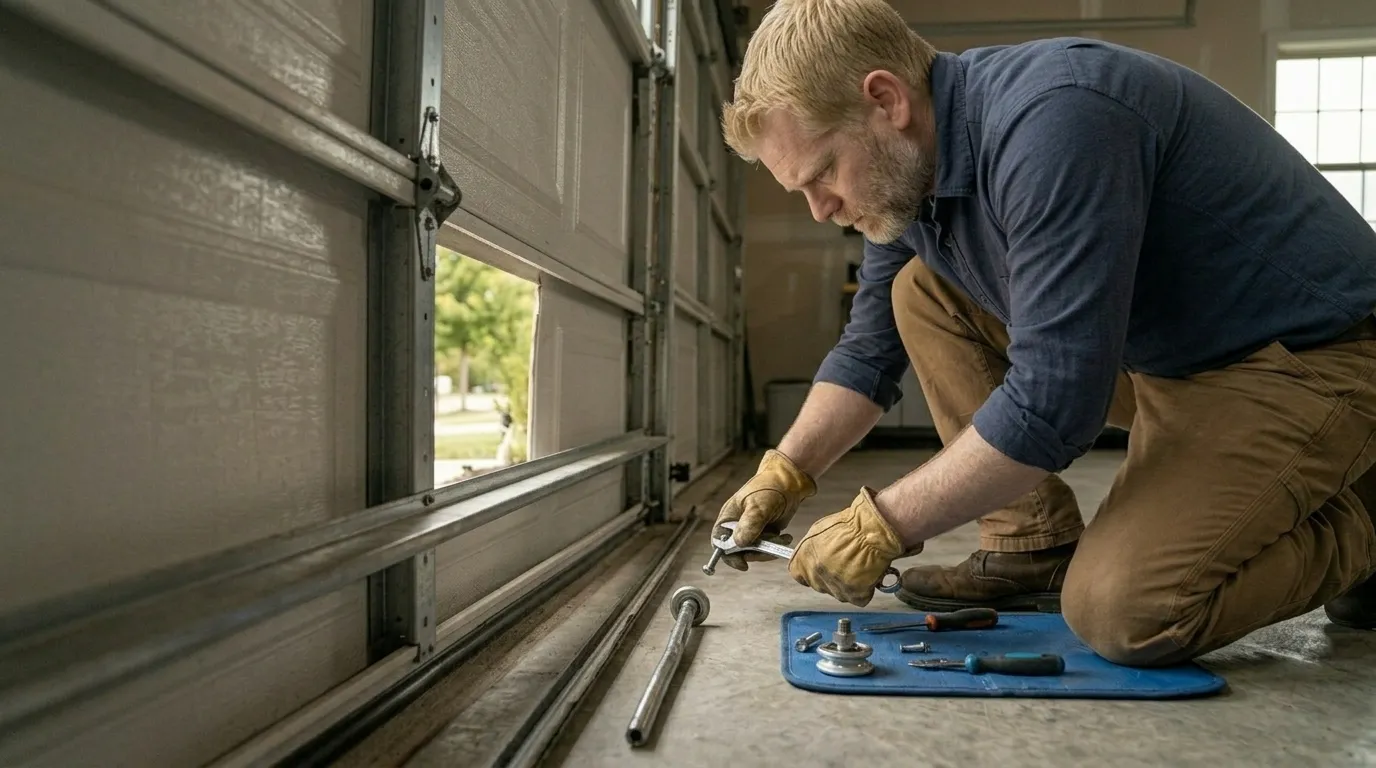
Havana sits sixteen miles out from Tallahassee, on the far edge of the territory we cover from the shop. That drive matters more here than it does on a call inside the city - it's not a five-minute hop, it's a real trip, and it shapes how we plan the day. We don't keep a branch or a crew stationed in Havana; every job here starts with a truck loaded before it leaves Tallahassee, which means we bring the rollers, the bearings, and the track hardware we expect to need rather than guessing once we're on-site.
That's not a complaint about the distance, it's just the reality of how a call here actually runs. If your rollers are grinding or a door is jumping the track, we'd rather know the symptom up front on the phone so the truck rolls with the right parts the first time, instead of a return trip. On a stretch this far out, one extra drive costs the whole afternoon, not just an hour.
Most of the housing stock in Havana went up around 1978, which is a full generation older than the newer subdivisions closer to Tallahassee where doors were hung in the '90s and 2000s. That age gap shows up directly in the roller hardware. A door from 1978 is far more likely to still be running on steel rollers in a plain steel track, not the nylon-and-ball-bearing setup that shipped standard on doors installed later in the run.
Swapping steel for nylon on a track this old usually means checking the track gauge and the roller stem length before anything gets ordered, because older track can run a slightly different profile than what's common now. We carry both stem lengths, but on some of these older doors the track itself is worn enough at the roller path that a straight roller swap won't quiet the door - the track needs truing or replacing too. That's the one thing we won't sugarcoat: if the track is grooved out from decades of steel-on-steel wear, new rollers alone are a short-term fix, and we'll say so before we bill for it.
On a door this old, roller failure rarely comes on suddenly - it builds. First it's a scrape on the way up, then a shudder partway through the cycle, then the door hangs on one side because a roller has seized in its bracket. Havana falls in a mild climate band with occasional freeze nights, which means the metal in these older track systems goes through more expansion and contraction over a winter than a strict no-freeze zone ever sees. That cycling loosens roller brackets and dries out whatever lubricant was last applied, faster than owners expect.
With just over a thousand households in Havana and a median income of $54,153 - noticeably lower than the $57,600 median across the wider service area - a lot of these doors have been running on the original hardware longer than they would in a neighborhood with more turnover. That's not a knock on anyone; it just means when a roller finally lets go here, it's often the whole set going at once, not one rogue roller.
The failure pattern in Havana comes down to the combination of age and climate, not one or the other alone. A 1978 build with steel rollers in steel track was fine for the first couple of decades. But mild-with-freeze cycling works on that hardware every winter, and after enough seasons the rollers wear oval instead of round, which is what causes the thump you hear as the door travels.
We won't tell you every noisy door needs full replacement - plenty of these jobs are a straight roller-and-bearing swap and the door runs quiet again. But if the track shows grooving at the roller path, or the door has started binding on one side, that's past what a roller swap alone fixes, and we'll tell you that on-site rather than sell a partial repair. If your Havana door isn't ready for rollers yet, our general roller replacement page for the Tallahassee area covers the broader service.
We load common roller sizes and both nylon and steel options before leaving Tallahassee, since Havana is far enough out that a second trip for parts costs the whole day. If your track needs a less common stem length or the track itself needs replacing, that part may need ordering.
Not by themselves. Plenty of doors from the late 1970s still run fine on steel rollers if the track hasn't worn. The issue is when decades of steel-on-steel contact groove the track, at which point new rollers alone won't stop the noise.
If the noise happens at the same spot in the door's travel every time, suspect the track. If it's a steady grinding through the whole cycle, that's usually the rollers. We check both before quoting, since replacing rollers on a grooved track doesn't fix the real problem.
It's the same mild-with-occasional-freeze band, but older steel hardware common in Havana's 1978-era housing reacts to that freeze-thaw cycling more than the nylon rollers standard on newer doors closer to town.