Tallahassee, FL · Garage Door Service
Garage door repair and service for Lafayette Park, about a mile west of downtown Tallahassee, where most houses date to the late 1970s through the mid-1990s.
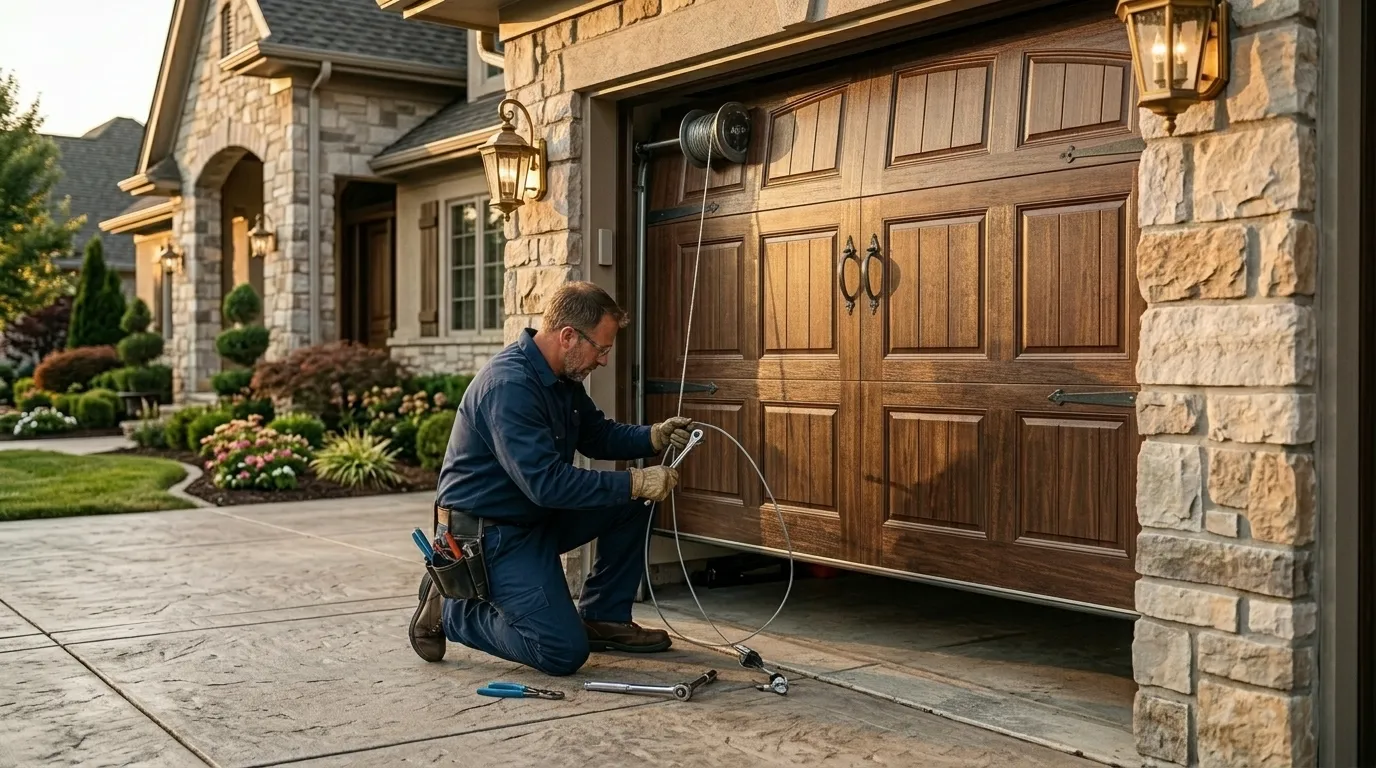
Lafayette Park sits about a mile west of downtown Tallahassee, and most of the houses here went up between 1978 and 2004, with the median build year landing around 1995. That puts a lot of garages on original steel doors from the 1980s and 90s builder wave - single-layer panels, extension springs mounted along the horizontal tracks instead of torsion bars overhead. Those springs are the calls we get most from this stretch: a spring that finally lets go after two or three decades of daily cycles, or a cable that's frayed at the drum from the same wear.
Openers are the other common call. A chain-drive unit installed when the house was built has usually been swapped once already, sometimes twice, and the logic boards and safety sensors on units that old don't match what's sold today. We also see rollers that have worn oblong instead of round, which shows up as a door that shudders or catches partway through its travel.
We don't have a list of specific streets or landmarks for this neighborhood, so we're not going to pretend we do. What we can say with confidence is what houses built in that window tend to need, because the hardware from that era is consistent enough to predict.
A stuck or noisy door isn't always urgent, but a door that won't close, or one where a spring has snapped with the door up, is worth a same-day look - a door stuck open on a broken spring puts real strain on the opener trying to lift it, and that can turn one repair into two.
Tallahassee's climate sits in a mild band with occasional freezes, so we're not fighting the extreme heat cycling or ice-jammed tracks you'd see farther north. That's a small mercy for hardware, but Florida humidity still works into old bearings and hinges over enough years, and a door that's been fine for two decades can start dragging within a season once corrosion sets into a roller shaft or a hinge pin.
One honest limitation: if a part on an older opener is genuinely out of production, we're not going to hunt for a salvage board that might fail again in six months. At that point replacing the opener is usually the straighter path, and we'll tell you when we think that's the case instead of running up a bill on a stopgap fix.
Across the service area there are roughly 6,047 households and about 3,414 owner-occupied houses, and median household income sits near $57,600. Those numbers matter here because they shape the kind of work that makes sense on a house like this: most owners are weighing a straight repair against a full door replacement, not defaulting to whichever costs more.
Given the 1978-2004 build window that covers most of this pocket, we expect steel single-layer doors, extension-spring setups on many of them, and openers that have already been through at least one replacement cycle. Panels from that era dent and rust at the bottom seal first, which is usually the visible sign that a door is closer to the end of its life than the springs or opener suggest.
We don't carry a fixed price list here, and we're not going to invent one. What we can tell you on-site, once we've looked at the actual spring size, track condition, and opener model on your door, is whether you're looking at a repair or a replacement, and why.
Most houses in this part of Tallahassee were built between 1978 and 2004, with the median landing around 1995. That means a lot of the original steel doors and extension-spring hardware are now two to four decades old, which is well past the point where springs and rollers start failing on their own.
We don't have a landmark or street-level list for this neighborhood, and we'd rather say so than guess. What we can speak to accurately is the housing era and the hardware it typically carries, which is consistent enough across the area to be useful.
The area sits in a mild climate band with occasional freezes, so extreme heat and ice aren't the main stress here. Humidity is the quieter factor - it works into bearings, hinges, and roller shafts over years, which is part of why older doors in this area develop drag and noise even without weather extremes.
Sometimes, but not always. If the logic board or a specific part is out of production, we'll say so rather than patch in a part that might fail again soon. In that case, replacing the opener is usually the more sensible move, and we'll walk you through why before you spend on a repair.
Call now or request a free quote - same-day service on most repairs, upfront written pricing.